Goddesses and Gods of the Druids
As a Druid you will naturally want to forge your own connection with one or more Celtic deities. For Druids our relationship with the Goddesses and Gods is a reciprocal affair.

To worship the Gods, to do no evil, and to exercise fortitude.
Triad of the Druids, Diogenes Laertius
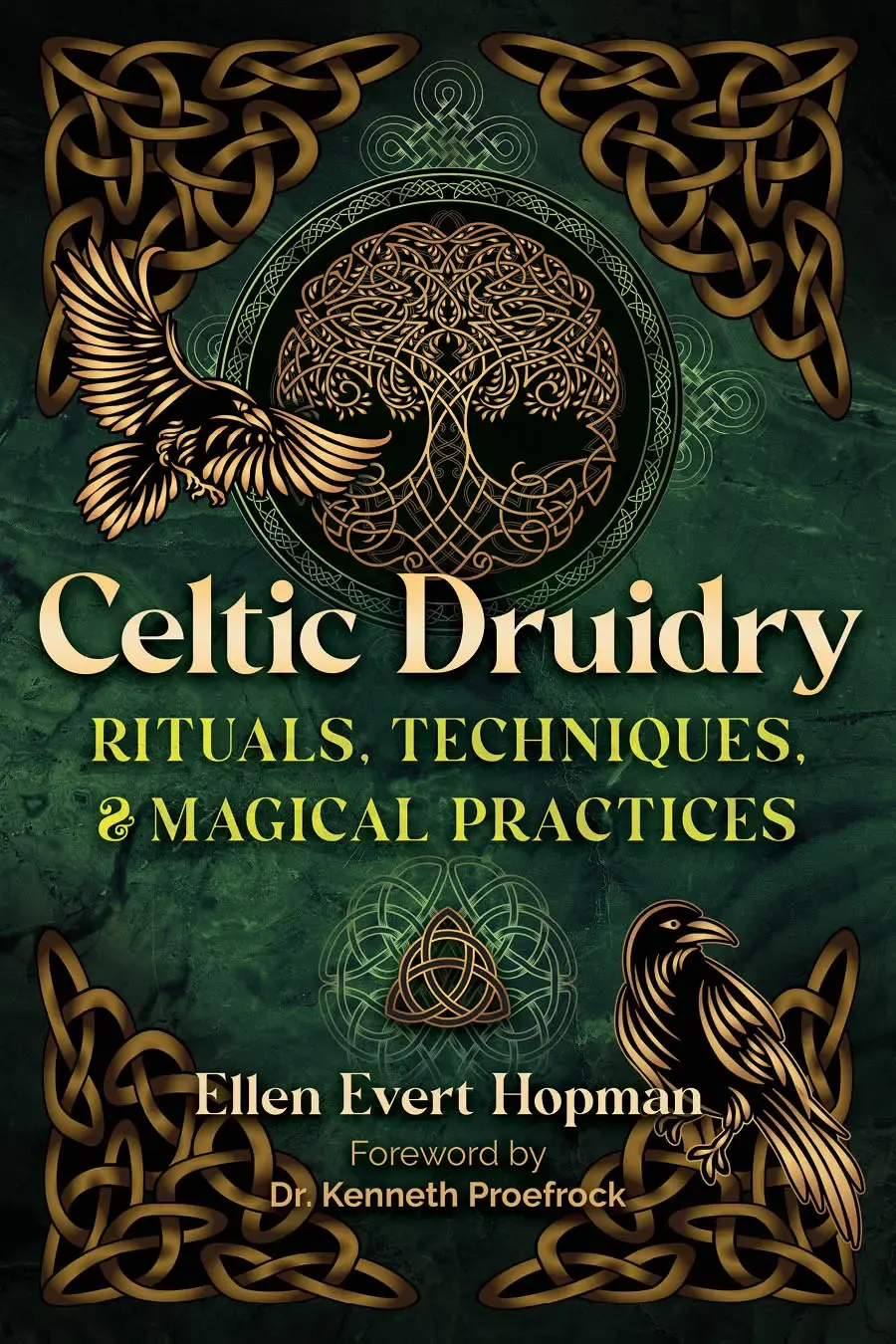
This is a book excerpt from “Celtic Druidry – Rituals, Techniques & Magical Practices” by Ellen Evert Hopman (Simon & Schuster) See all of her books at www.elleneverthopman.com/shop/
I have been a devotee of the Goddess Brighid for over thirty years. A hand-carved wooden statue of her stands on my altar, surrounded by candles, acorns, and other sacred objects. She is the one who has inspired my writings and pushed me to teach and to speak about Druidism.
I also have a Brighid Well behind the house, deep in the oak forest. To get there I walk a narrow woodland trail, then come to a little stream that has a number of pools and small waterfalls built into it with rocks. My Druid Grove has made offerings of coins, flowers, and fruits, and sung to the Well, for over thirty years. There is a small rag tree overhanging the Well where we tie our clooties (small strips of cloth) after dipping them into the water and pressing them to any part of our body that is ailing. As the rags decompose, so do our troubles.
This type of holy well is known as a “rag tree” in Ireland or a “clootie well” in Scotland (clootie means “little cloth” in Scots). These types of wells have been in use in Celtic areas and in England for millennia. Originally the wells were sacred to Celtic deities but after the Christian conversions became reconsecrated to Christian saints. The classic configuration for such a well is water, an associated stone or stones, and an overhanging tree, typically a Hawthorn or an Ash.
Crossing the stream, I climb a small hill in the forest that came complete with a natural circle of stones. There is now a fire pit in the center. Looking up at the Oak leaves and the sky beyond feels like gazing at an elaborate, green, stained-glass window that is set in a vast open-air cathedral. This is the place where we make our offerings to the Celtic deities by placing gifts to them into the fire. The fire carries the offerings upward, to the Sky Realm, the abode of the High Goddesses and Gods.
Bonding with Celtic Deities
As a Druid you will naturally want to forge your own connection with one or more Celtic deities. For Druids our relationship with the Goddesses and Gods is a reciprocal affair. We make offerings to them on the high holy days and on other important occasions, and they reciprocate by inspiring and guiding us through dreams, divinations, and signs.
If you are just starting out on this path, you may not yet have a divine patron or patroness to collaborate with. Be patient, because over time a deity will choose you. There is no need to worry about this. A deity will come to you eventually, and when they do, you will know. Once that happens you can make gifts to them of music, poetry, and song, and place artworks or gifts of food into the fire for them (because the flames carry the offerings to the Sky Realm). Or, put offerings of flowers, fruits, crafts, or silver into water, or on the earth, in their honor. You can light a candle for them, offer incense, or even set a place at the table for them on the high holy days and at feasts.
We know the names of over four hundred Goddesses and Gods of the Celts. Most of the names are from inscriptions, and a few come down to us from traditional stories. For others we have statues and carved altars as evidence.
We Druids do not grovel or debase ourselves before our Goddesses and Gods. We do not apologize for “sins” nor do we kneel in submission. We see our Goddesses and Gods as shining examples of what we ourselves may become, if we apply ourselves with courage and passion. The goal of the Druid worshipper is to be just like them.
For example, someone studying to become a jeweler and gold-smith might maintain an altar in honor of Lugh and seek to master her craft as skillfully as he mastered it. A blacksmith might dedicate his forge to the Fire Goddess Brighid, so that her inspiration will guide his imagination and hands. A farmer might petition a Land Goddess such as Anu, in hope that her energy and guidance will help him to coax life from the soil.
Groups of skilled craftspeople and artisans worshipped the same deities, making them members of a type of guild. Druids would have worshipped Goddesses and Gods such as An Daghda, the Good God and learned leader, to guide and inspire them. Healers would have honored Dian Cecht or Brighid. And so on.
Ellen Evert Hopman
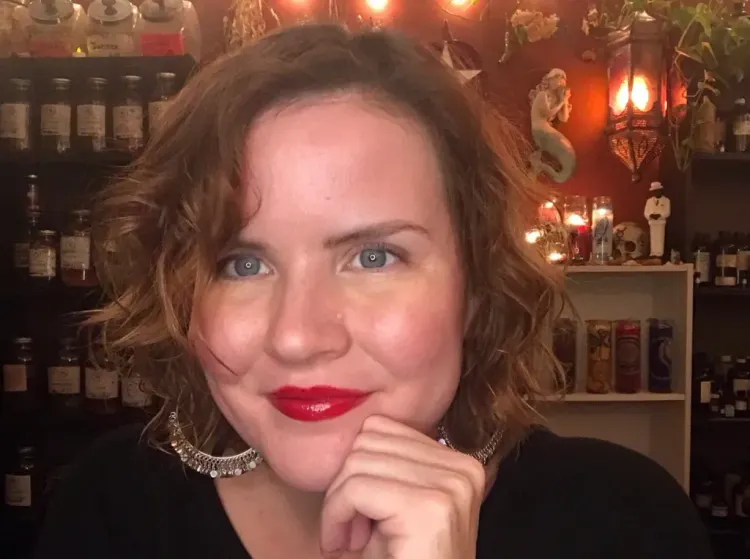
Ellen Evert Hopman lives in an oak forest in western Massachusetts, which is exactly where one hopes to find a Druid. She is a herbalist, an author, and one of the founding voices of modern Druidry in North America, and her shelf of books is nearly as dense as her woods.
Ellen is Archdruid Emerita and founder of Tribe of the Oak (Tuatha na Dara), a Celtic Reconstructionist Druid Order. She also helped found the Order of White Oak, where she served as co-Chief, and The Henge of Keltria, where she served as Vice President. Her path has wound through ADF and OBOD, she is a Bard of the Gorsedd of Caer Abiri in England, and she sits on the Grey Council of Mages and Sages. She is a registered Herbalist with the American Herbalists Guild.
Her writing spans Celtic herbals, seasonal lore, children's books, and the Priestess of the Forest trilogy of Druid novels. Secret Medicines from Your Garden won both the International Herb Association Book of the Year and the Coalition of Visionary Resources Award. Her seasonal series gathers the herbs, recipes, and rites of Samhain, Beltaine, and Yule, and The Real Witches of New England speaks with the living descendants of accused witches alongside today's practitioners. Her most recent offerings are The Sacred Herbs of Yule and Christmas and Celtic Druidry.
Ellen writes the way a good elder teaches: with a remedy in one hand, a story in the other, and a pot of something seasonal on the stove.
Find her books, including signed copies, at elleneverthopman.com.
Quarterly publication